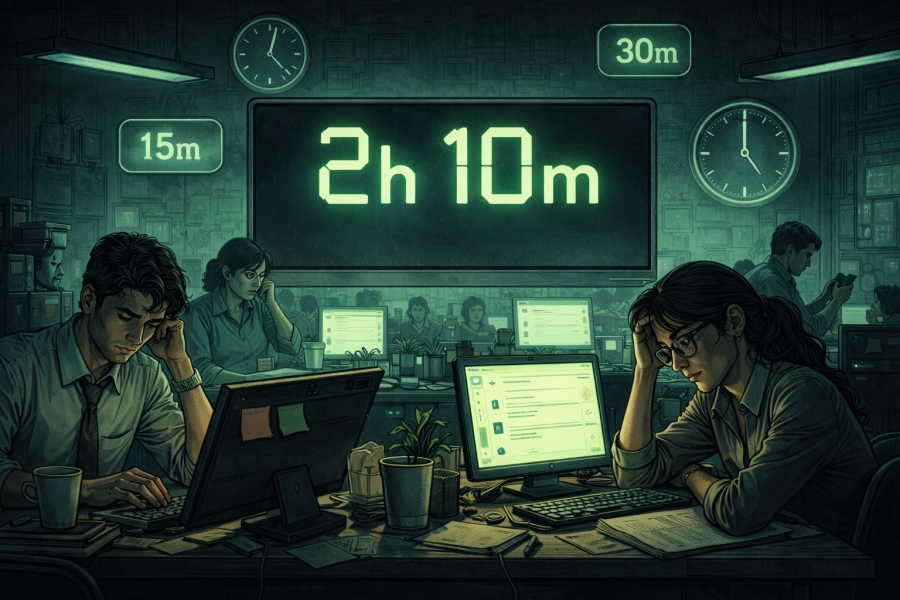


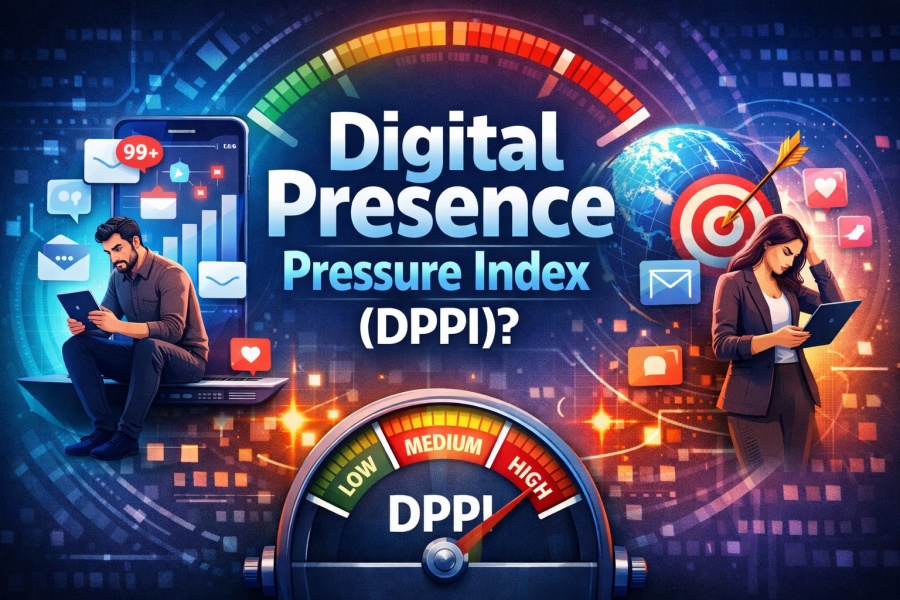
In the modern workplace, there’s an unwritten rule: if you’re online, you’re working. If you’re not — you’re probably not working enough.
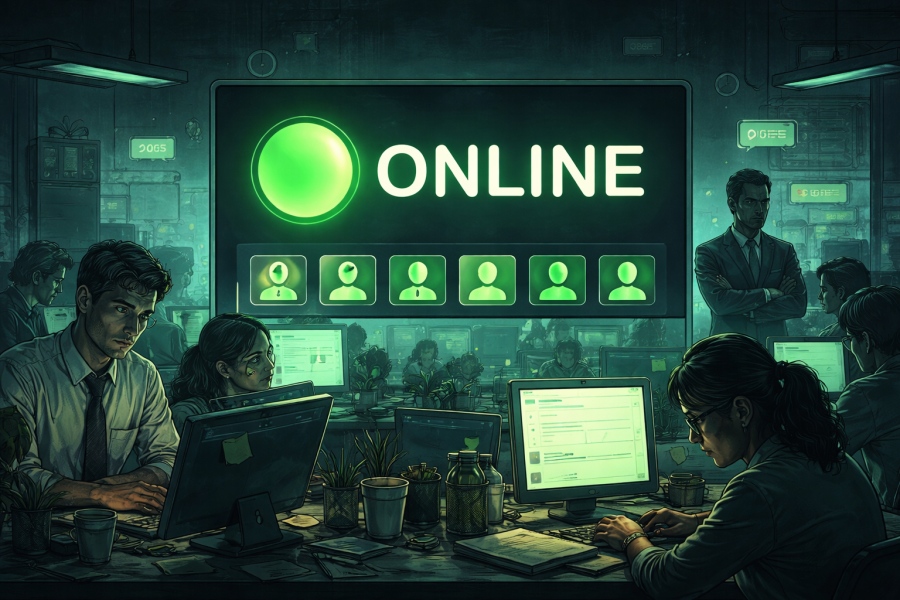
In a traditional office, the symbolism of work was clear: a desk, a chair, and a body sitting at that desk. If you were physically present, it was assumed you were working. If you weren’t, the question was why.
Digital transformation promised liberation from that logic. Remote work, flexible schedules, and collaboration tools were supposed to shift the focus from presence to outcomes. Instead, we got a new version of the same old control — just in the shape of a small green dot.
Today, “online” status has become the digital equivalent of sitting at your desk. The problem is that the dot measures presence, not contribution.
In a traditional office environment, management had visual proof that employees were “there.” In a digital environment, that proof has been replaced by activity indicators: a green dot, “active now,” “last seen 2 minutes ago.”
Tools like Slack, Teams, and other internal communication platforms were designed to enable collaboration. At the same time, they introduced a new metric of work: visibility.
If you’re online, there is a perception of engagement.
If you’re offline, suspicion appears.
It’s a subtle but profound shift. The focus has moved from “What did you accomplish?” to “Are you there?”
One of the paradoxes of modern work is that activity is easier to measure than results. Activity is visible: messages, replies, reactions, status updates. Results are more complex: quality of solutions, creativity, long-term impact.
The green dot offers simplicity. It’s binary. You are either there or you aren’t. But work is not binary.
Creative tasks, analytical processes, and deep focus often require periods of silence. In those moments, a person may be at their most productive — but least visible.
In a culture of constant availability, that silence begins to look suspicious.
Micromanagement isn’t new. Digital tools have simply made it more precise — and less visible. There’s no need to walk between desks anymore; there’s an activity dashboard.
In such a system, response speed becomes an indicator of professionalism. If you react within minutes, you signal presence. If you delay, you risk being perceived as disengaged — regardless of what you are actually doing.
Here’s the core issue:
When response speed matters more than response quality, the system starts rewarding reactivity instead of thoughtfulness.
Over time, that creates a culture of shallow communication and fragmented focus.
Let’s use a simple calculation. If the average hourly rate is around €8, each minute of work is worth roughly €0.13. When a notification interrupts deep focus, it realistically takes several minutes to regain concentration.
If that happens ten times a day, the cumulative loss of focus becomes significant. Yet paradoxically, the system continues to reward the very micro-reactions that cause those interruptions.
The green dot does not measure depth of work. It measures presence in a communication channel.
In this context, employees begin adapting their behavior to measurable signals. If online status matters, they maintain online status. If fast replies are valued, they reply quickly — even when they have nothing substantial to add.
What emerges is what we might call “productivity theatre” — a performance of activity designed to maintain the perception of work.
Opening and closing apps.
Sending messages without substance.
Refreshing the inbox repeatedly.
These are micro-actions that increase visibility, but not necessarily value.
Measuring outcomes requires clearly defined goals, metrics, and trust. It’s easier to track presence than to assess quality of thinking. It’s easier to count replies than to evaluate impact.
In organizations that haven’t built a culture of clear expectations, online status becomes a substitute for structure. The green dot becomes management’s safety net: at least we know they’re “there.”
But presence is not the same as progress.
Phrases like “always-on culture” and “remote work monitoring” increasingly describe the reality of modern work. The boundary between working hours and private space blurs, while digital tools allow continuous presence checks.
When employees feel the need to appear visible even during short breaks, it’s clear the system’s focus has shifted. Instead of optimizing for outcomes, it optimizes for perception.
The green dot becomes a symbol of a broader issue: work has turned into something that must be proven in real time.
Organizations that prioritize outcomes over presence operate on a different logic. Communication revolves around goals and deadlines, not constant availability checks. In such systems, an offline status doesn’t trigger panic — it implies focus.
That requires trust — and the courage to let go of the illusion of control.
The green dot itself isn’t the problem. It’s a technical indicator. The problem arises when it becomes a symbol of value.
When it’s more important to look busy than to be effective, the system begins rewarding visibility instead of contribution. In the long run, that doesn’t create better results — it creates better performances of work.
If we want healthier and more productive workplaces, the question shouldn’t be “Are you online?” but “Are our goals clear and measurable?”
In a serious professional system, results should shine brighter than any green dot.