


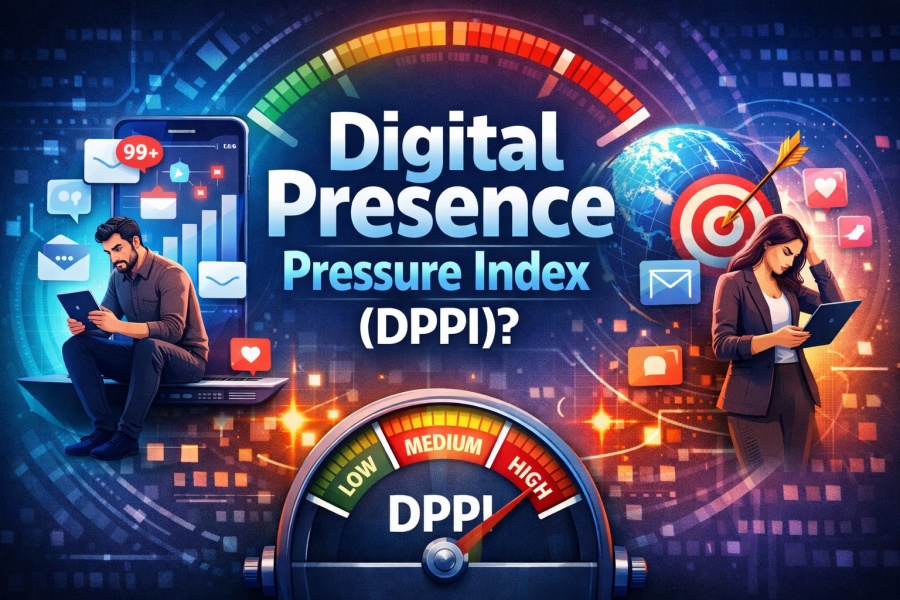
In the modern workplace, there’s an unwritten rule: if you’re online, you’re working. If you’re not — you’re probably not working enough.
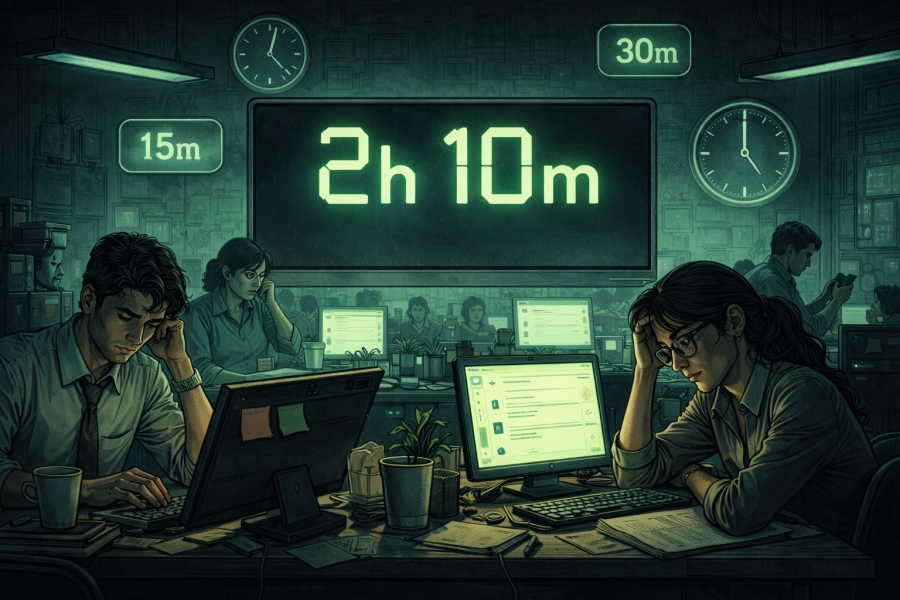
In today’s digital office, work is no longer just about completing tasks. It’s also a constant demonstration of presence. From typing without substance to “meetings that exist only to fill the calendar,” employees spend a significant portion of their day performing work rather than making real progress. Every interaction, no matter how small, becomes a measure of engagement.
Analyses suggest the average office worker spends 20–40 minutes a day actively simulating work, and some reports, including micro-studies on focus interruptions, indicate it can be up to an hour daily. Micro-performances include constantly refreshing the inbox, alt-tabbing between apps, sending meaningless chat messages, and quickly replying to emails just to keep the status “green.” These actions contribute minimally to project progress but heavily influence the perception of productivity.
Cognitive focus studies show that it takes about 10–15 minutes to fully regain concentration after an interruption. If there are ten micro-interruptions a day related to maintaining the appearance of activity, the total time lost to refocusing can easily reach 1.5 to 2 hours daily. That’s more than a quarter of a standard workday, during which employees are formally “working.”
Meanwhile, digital tools ensure this loss of attention isn’t visible externally. Employees remain on platforms, statuses stay online, messages are sent. Visibility is maintained, but actual progress stagnates. In this sense, digital work becomes a form of “productivity theatre” — performance over functional output.
The most common activities that consume time without contributing results include:
Typing without substance — short chat messages just to show activity.
Alt-tabbing and open windows — simulating multitasking while actually doing nothing.
Extended meetings — often with no clear goal, but “fill the calendar” visibility is achieved.
Email forwarding or resending — creating traces of activity without added value.
Micro-mouse movements or “Active” status — small actions to maintain online visibility.
Individually, these actions are harmless, but cumulatively, they significantly reduce team productivity.
A system that rewards visibility over contribution creates psychological pressure. Employees develop visibility anxiety: they feel the need to always appear present, even when focused work would be more productive. Mental energy is spent maintaining the performance, which further diminishes real output.
Research shows that the constant need to prove activity increases stress and fatigue while reducing the capacity for creative problem-solving. In practice, employees who are “always online” often achieve less than those who can carve out uninterrupted time for deep focus.
A culture of constant visibility creates a paradox: the more you show you’re working, the less you actually achieve. All the rituals of micro-performance aim to maintain the illusion of engagement but ultimately fragment the workday. This leads to chronic shallow productivity, where focus is divided between actual work and “maintaining the appearance.”
Remove the need to constantly prove activity, and most of these micro-performances disappear naturally. What remains is focus, silence, and real progress.
Without constant oversight, a significant portion of the time we spend pretending to work could be converted into real results. The paradox of modern work is that tools designed to make work easier often push us to demonstrate it instead of actually doing it. True productivity isn’t measured by messages sent, response speed, or green dots — it’s measured by outcomes, clearly defined goals, and the ability to complete what matters.
Ultimately, time spent pretending to work isn’t just a statistic. It’s a mirror of a culture obsessed with constant presence and proof that learning to value focus over performance is more important than ever.
In the modern workplace, there’s an unwritten rule: if you’re online, you’re working. If you’re not — you’re probably not working enough.
Remote work was supposed to bring freedom. Instead, in many organizations, it introduced a new form of control — quiet, digital, and constant. In a physical office, it was enough to sit at your desk. In a remote environment, you have to glow green.