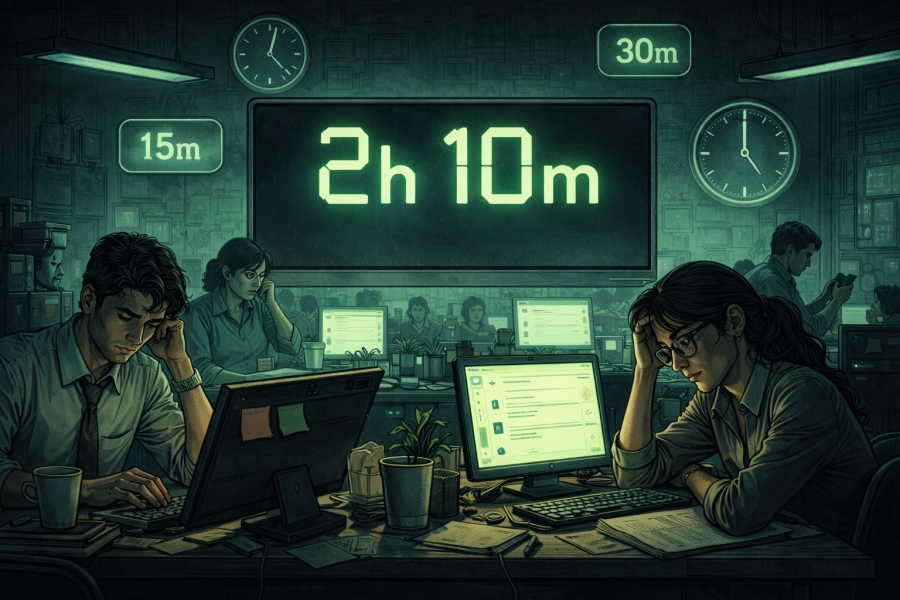


In the modern workplace, there’s an unwritten rule: if you’re online, you’re working. If you’re not — you’re probably not working enough.

There are sentences that sound neutral but carry the weight of accusation. In the digital workplace, none is as short, as frequent, and as tense as:
“Are you there?”
Two words. No exclamation mark. No context. No greeting.
In theory, it’s an innocent question. In practice, it’s a micro-check of loyalty, presence, and implicit productivity. In a world where online status has become a unit of engagement, “are you there?” is no longer a question of location — it’s a request for justification.
Remote work, hybrid models, and tools like Slack, Teams, and other internal communication platforms have transformed how we perceive work. Physical presence has been replaced by a green dot. “Online” status has become the digital equivalent of sitting at your desk.
The problem? Visibility has become more important than results.
In that environment, a few minutes of inactivity can trigger discomfort. Not because work has stopped, but because the perception of work has disappeared. That’s where “are you there?” enters — as a signal that someone has noticed your invisibility.
It’s not an operational question. It’s a reminder.
Passive-aggressive communication is characterized by concealed criticism or control without direct confrontation. “Are you there?” fits perfectly because it:
Does not specify a problem.
Provides no context.
Implies that absence is already an issue.
In a traditional office, a colleague would simply walk up to your desk. In a digital space, the message arrives as a notification that breaks focus and introduces doubt:
Was I offline too long?
Did I miss something?
Do I look inactive?
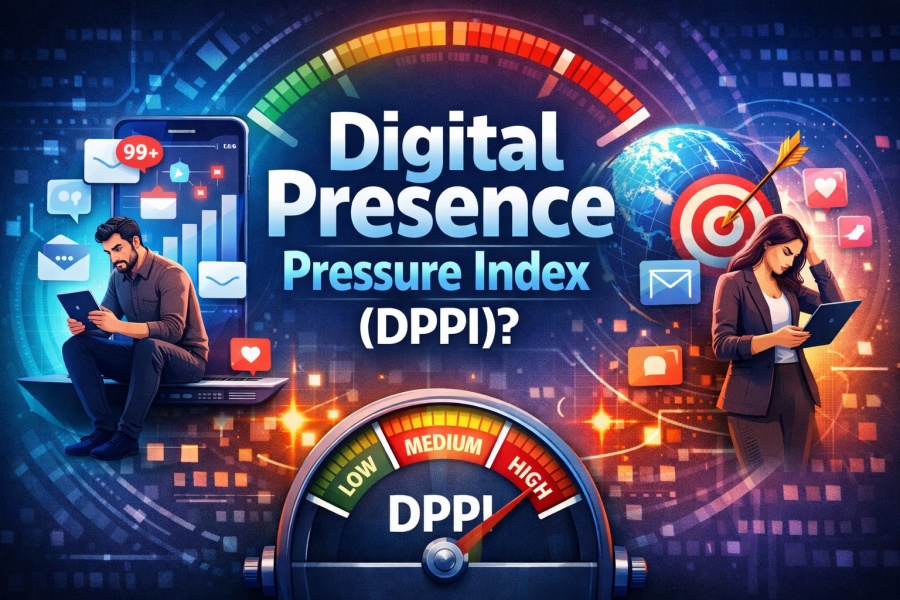
This micro-interaction generates what is increasingly described as digital presence anxiety — the feeling that you must continuously prove you’re working.
Let’s return to the numbers. If we assume an average net salary of around €1,300 per month and 160 working hours, the hourly rate is approximately €8.13.
That means one minute of work is worth about €0.135.
If a message like “are you there?” interrupts focus and realistically causes five minutes of mental reset before you fully return to the task, that equals:
5 × €0.135 = €0.675
On a single interruption level — less than a euro.
But if such checks happen three times per day:
€0.675 × 3 = €2.025 per day
On a monthly level (22 working days):
€2.025 × 22 = €44.55
Annually:
€44.55 × 12 = €534.60
In other words, interruptions caused by micro-checks of presence can “consume” more than €500 worth of work capacity per employee per year.
This isn’t about literal salary loss — it’s about lost focus and productive capacity.
Terms like “micromanagement at work,” “remote work monitoring,” and “always-on culture” are no longer theoretical concepts. Digital tools have enabled flexibility, but also subtler forms of surveillance.
“Are you there?” is often not an expression of concern. It’s a digital ping confirming hierarchy: I check, you respond.
The paradox is obvious. In workplaces that officially promote autonomy and flexibility, employees often feel obligated to react within seconds. Response speed becomes an indicator of professionalism, even though there is no evidence that it correlates with quality of work.
Much of digital workplace communication is marked by false urgency. A notification creates the feeling of priority, even when the content does not require an immediate response.
“Are you there?” is a perfect example.
Rarely is it followed by something truly urgent. More often, it’s an introduction to a request that could have been written in the same message. Yet the communication pattern remains: first confirm presence, then receive the task.
That pattern promotes constant alertness — but not necessarily real productivity.
Humans are not designed for continuous monitoring, even when it’s digital. Every micro-check activates a defensive mechanism: the need to justify yourself.
In such an environment, employees develop behaviors adapted to surveillance:
Quick, superficial replies
Simulated activity
Frequent message-checking without real necessity
The result is paradoxical: more visibility, less deep work.
Of course it can. In environments where results are valued over constant presence, communication is clear and contextual. Instead of “are you there?”, the message becomes:
“I need X by 3 PM — let me know if you get stuck.”
The difference is subtle but crucial. The focus shifts from control to outcome.
“Are you there?” isn’t problematic because of its length, but because of its symbolism. It reflects a culture in which work is measured by presence rather than contribution.
In a digital workplace, two words can generate more stress than a complex task. Not because they are heavy — but because they imply doubt.
If we want a more productive and healthier work environment, perhaps the question should not be “are you there?” but “have we defined expectations clearly enough that we don’t need to check for presence?”
In a serious professional relationship, trust should be the default — not a notification.